Climate Diplomacy
Global Issues
Noah Gordon, adelphi

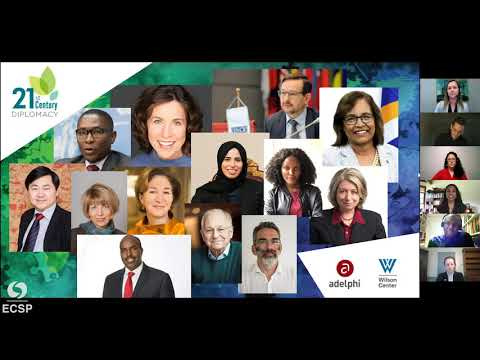
The best resource for all of our 21st Century Diplomacy: Foreign Policy Is Climate Policy content is the official website, hosted by the Wilson Center and adelphi. But the ECC editors are also collecting the topics here for eager readers.


Discover the essays:

The actions of the United States, China, and India will largely determine climate’s impact on the globe. At the same time, climate change is already influencing today’s era of great power competition and redefining the landscape of global leadership.


The climate crisis lays bare issues of inequity and injustice. Those least responsible for climate change are most vulnerable to its impacts. How can the foreign policy community accelerate and align efforts to address climate change with the global rallying cry for a more equitable and just world?


The Paris Agreement and UNFCCC process remains the primary avenue for current climate efforts and nation-state-to-nation-state diplomacy. This traditional mode of diplomacy is indispensable, but neglects the transformative power of sub- and non-state actors that are teaming up to take progressive action and form new leadership coalitions. What do these new modes of multilateralism mean for 21st century diplomacy?


Storm surges leave people stranded in their homes. Climate change can leave billion-dollar assets and entire sectors stranded, their value eroded by the changing economic landscape. Central banks, insurers, and financial regulators need to account for climate risk, including in international negotiations.


Decarbonizing the global energy system could spare every country from the most damaging climate impacts. However, universal benefits are not equal benefits, and the balance of power and relations between states will inevitably shift. What will the new geopolitical landscape look like?


Climate change is already a key driver in people’s decisions to move. The current foreign policy narrative on climate-affected migration focuses on security threats, border controls, and refugee management. But to empower those who are at the climate and mobility crossroads to enjoy meaningful choices, the diplomatic community will need to facilitate the protection of life and dignity, whether individuals and communities are on the move or choosing to stay in place.


Geoengineering is deliberate large-scale intervention in the Earth’s natural systems to combat climate change. Solar radiation management (SRM) is arguably the most likely technology to be deployed. An appealing technology option for some and risky endeavor for many, the lack of international norms or regulations on SRM research and deployment is a pressing diplomatic priority.

Download the full report here


Climate Change
Climate Diplomacy
Finance
Global Issues
Chloé Farand, Climate Home News

From contentious rules on carbon trading, through efforts to raise ambition to who will host next year’s summit, negotiators have a full agenda this fortnight. Climate talks resume this week in Bonn, Germany, with negotiators working to finalise the last contentious points of the rulebook for the Paris Agreement.

Climate Change
Climate Diplomacy
Europe
Sam Morgan, Euractiv

Germany, Greece, Italy and Slovenia have added their names to a growing list of EU countries supporting a carbon neutrality objective for 2050, increasing the chances that a deal will be struck at an EU summit later this week, according to documents seen by EURACTIV.

Energy
South America
Asia
Lili Pike and Fermin Koop, China Dialogue

Costs, emissions and safety are at stake as Argentina and China look set to seal a nuclear power deal. In the midst of economic and political uncertainty, Argentina has doubled down on a major Chinese nuclear power deal. The new nuclear plant in Buenos Aires province will help meet Argentina’s energy needs with the support of Chinese technology and finance.

Climate Change
Climate Diplomacy
Security
Global Issues
Heiko Maas, German Federal Foreign Office

On Tuesday, 4 June, seven foreign ministers, 19 ambassadors, several ministers and more than 200 experts met in Berlin to act on climate security risks at the Berlin Climate and Security Conference. "Achieving the international climate targets is the new imperative of our foreign policy”, the German Foreign Minister, Heiko Maas, said in his opening speech. This is the aim of the Berlin Call for Action which was presented at the conference.