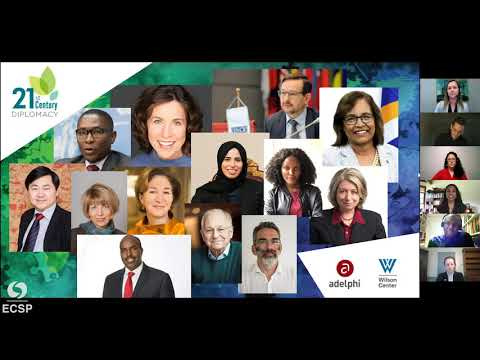
The best resource for all of our 21st Century Diplomacy: Foreign Policy Is Climate Policy content is the official website, hosted by the Wilson Center and adelphi. But the ECC editors are also collecting the topics here for eager readers.
The actions of the United States, China, and India will largely determine climate’s impact on the globe. At the same time, climate change is already influencing today’s era of great power competition and redefining the landscape of global leadership.
The climate crisis lays bare issues of inequity and injustice. Those least responsible for climate change are most vulnerable to its impacts. How can the foreign policy community accelerate and align efforts to address climate change with the global rallying cry for a more equitable and just world?
The Paris Agreement and UNFCCC process remains the primary avenue for current climate efforts and nation-state-to-nation-state diplomacy. This traditional mode of diplomacy is indispensable, but neglects the transformative power of sub- and non-state actors that are teaming up to take progressive action and form new leadership coalitions. What do these new modes of multilateralism mean for 21st century diplomacy?
Storm surges leave people stranded in their homes. Climate change can leave billion-dollar assets and entire sectors stranded, their value eroded by the changing economic landscape. Central banks, insurers, and financial regulators need to account for climate risk, including in international negotiations.
Decarbonizing the global energy system could spare every country from the most damaging climate impacts. However, universal benefits are not equal benefits, and the balance of power and relations between states will inevitably shift. What will the new geopolitical landscape look like?
Climate change is already a key driver in people’s decisions to move. The current foreign policy narrative on climate-affected migration focuses on security threats, border controls, and refugee management. But to empower those who are at the climate and mobility crossroads to enjoy meaningful choices, the diplomatic community will need to facilitate the protection of life and dignity, whether individuals and communities are on the move or choosing to stay in place.
Geoengineering is deliberate large-scale intervention in the Earth’s natural systems to combat climate change. Solar radiation management (SRM) is arguably the most likely technology to be deployed. An appealing technology option for some and risky endeavor for many, the lack of international norms or regulations on SRM research and deployment is a pressing diplomatic priority.
Environmental defenders in Brazil are at risk — last year, 57 were assassinated and the numbers are increasing. The UN has launched a new initiative to address the escalating violence. This article shows the challenges faced by an activist from the Amazon region who fights for justice, and it notes how the Brazilian government can save lives while preventing unregulated exploitation in the region.
Changes are occurring that could make climate action a driver of the domestic agenda for economic and social progress and for international cooperation. With the help of market forces and technological advances, the tide is moving toward climate action. Paul Joffe argues that a key to success is a strategy that draws public support and makes climate policy a force in a larger industrial renaissance.
The world can achieve slower climate warming, preventing temperatures from rising by more than 1.5˚C, a global scientific panel says. But time is short.
Climate Diplomacy Week is a perfect opportunity to highlight positive climate action, set new goals and engage more and new actors in the fight against the devastating impacts of climate change. Each year, the week has its own character. Climate Diplomacy Week 2018, from 24-30 September, was marked by action – throughout the world, civil society participated in inspiring educational activities and engaged the wider public in the climate cause.