

In 2020 the European Peacebuilding Liaison Office (EPLO), together with adelphi and the Climate Diplomacy initiative, with support from the German Federal Foreign Office, organised two series of online workshops. The series brought together civil society experts and policymakers to discuss challenges, lessons learned, best practices and recommendations relating to how to address the linkages between climate change, conflict and peace.
The discussions were focused in particular on how to integrate peacebuilding efforts and climate resilience programming, including through initiatives bringing communities together to address the effects of climate change and prevent conflict. A report presents the key points from the discussions in the eight workshops in the series, while a policy brief presents a summary of the key points and recommendations.
24 September 2020 - Community Resilience to Climate Change and Conflict: Lessons From the Pacific
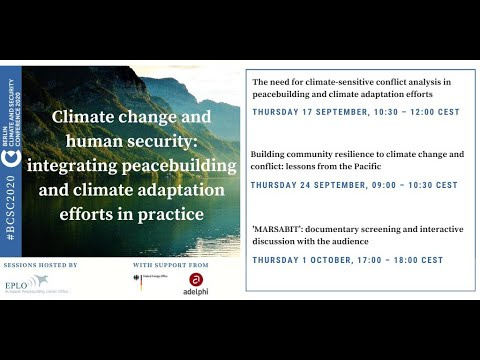
01 October 2020 - MARSABIT: Documentary Screening & Interactive Discussion
75 years ago, the UN was born. In Latin America and the Caribbean, the UN looks back at several important achievements, but much work on persisting challenges still lies ahead. Increased UN engagement in three areas can make the region more resilient to future challenges.
Conflicts connected to water-security are often related to climate change issues. However, the link between water-scarcity-related risks and security challenges is not as straightforward, direct and immediate as often perceived. The online workshop ‘Mobilising decision-makers on water scarcity-induced conflict risks: The Water, Peace and Security Partnership’, organised by the European Peacebuilding Liaison Office (EPLO) and adelphi, looked into this complex relationship.
Insecurity is plaguing north-western Nigeria, due to persistent herder-farmer tensions, rising crime and infiltration by Islamist militants. Federal and state authorities should focus on resolving conflict between agrarian and pastoralist communities, through dialogue and resource-sharing agreements, while also stepping up law enforcement.
The scope of national security is expanding beyond violent threats to encompass a broader array of dangers. In an article for World Politics Review, CFR's Stewart M. Patrick assesses the implications of COVID-19 and climate change for the theory and practice of national security.