

In 2020 the European Peacebuilding Liaison Office (EPLO), together with adelphi and the Climate Diplomacy initiative, with support from the German Federal Foreign Office, organised two series of online workshops. The series brought together civil society experts and policymakers to discuss challenges, lessons learned, best practices and recommendations relating to how to address the linkages between climate change, conflict and peace.
The discussions were focused in particular on how to integrate peacebuilding efforts and climate resilience programming, including through initiatives bringing communities together to address the effects of climate change and prevent conflict. A report presents the key points from the discussions in the eight workshops in the series, while a policy brief presents a summary of the key points and recommendations.
24 September 2020 - Community Resilience to Climate Change and Conflict: Lessons From the Pacific
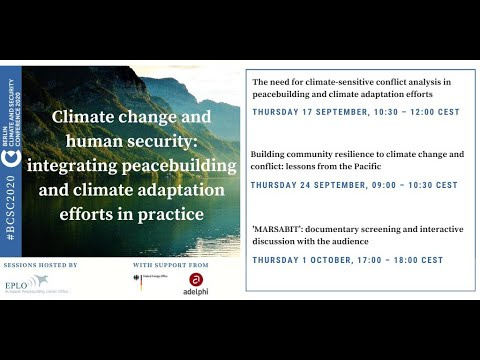
01 October 2020 - MARSABIT: Documentary Screening & Interactive Discussion
Although there is no causality nor direct and automatic link between climate change and conflict, we can see that climate change can intensify conflict drivers and make it harder to find stability. The online workshop "Climate change, conflict and fragility: Increasing resilience against climate-fragility risks", organised by the European Peacebuilding Liaison Office (EPLO) and adelphi, looked into this complex relationship.
Since the outbreak of the COVID-19 pandemic, numerous parallels have been drawn between this health crisis and the climate crisis. Science plays an important role in advising decision makers on how to ensure sustainable crisis management and a precautionary approach to avoid harmful repercussions, particularly where we do not yet know all the consequences of our actions. [...]
Decarbonisation won’t come as fast as the pandemic. But if fossil fuel exporters are not prepared for it, they will face an enduring crisis. The EU can help.
Stories of clear skies and wildlife conquering urban areas might provide much needed comfort during these uncertain times as the health crisis unfolds. But in Brazil, where climate and environmental issues already lack attention and resources, the pandemic underscores the next crisis.