

In 2020 the European Peacebuilding Liaison Office (EPLO), together with adelphi and the Climate Diplomacy initiative, with support from the German Federal Foreign Office, organised two series of online workshops. The series brought together civil society experts and policymakers to discuss challenges, lessons learned, best practices and recommendations relating to how to address the linkages between climate change, conflict and peace.
The discussions were focused in particular on how to integrate peacebuilding efforts and climate resilience programming, including through initiatives bringing communities together to address the effects of climate change and prevent conflict. A report presents the key points from the discussions in the eight workshops in the series, while a policy brief presents a summary of the key points and recommendations.
24 September 2020 - Community Resilience to Climate Change and Conflict: Lessons From the Pacific
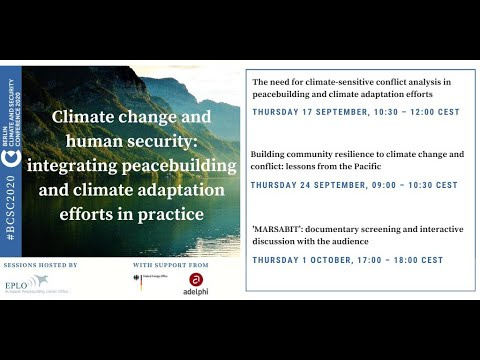
01 October 2020 - MARSABIT: Documentary Screening & Interactive Discussion
For the first time in the survey’s 10-year outlook, the top five global risks in terms of likelihood are all environmental. They are: extreme weather events, failure of climate change mitigation and adaptation, major natural disasters, major biodiversity loss and ecosystem collapse, and human-made environmental damage and disasters.
Millions of people across Sub-Saharan Africa could face grave hunger in the first half of 2020 because of armed conflict, political instability and climate change-linked disasters, a report says.
The report published by the UN World Food Programme (WFP) this month says that the countries affected will require life-saving food assistance and investment to prevent humanitarian catastrophes.
Australia is currently experiencing one of its worst bushfire seasons, with swathes of the southern and eastern coastal regions having been ablaze for weeks. As the fires have spread, there has been extensive media coverage both nationally and internationally documenting – and debating – their impacts. This Carbon Brief overview summarises how the fires – and the political response to them – have been covered by the media.
The latest climate talks unravelled when parties failed to reach consensus on the global carbon market mandated by the Paris Agreement. The carbon market controversy emerged amidst new tensions between a growing grassroots climate movement and the climate sceptic agenda of populist leaders. The ball is now in the court of the climate laggards, but they can only halt global climate action for so long.