

In 2020 the European Peacebuilding Liaison Office (EPLO), together with adelphi and the Climate Diplomacy initiative, with support from the German Federal Foreign Office, organised two series of online workshops. The series brought together civil society experts and policymakers to discuss challenges, lessons learned, best practices and recommendations relating to how to address the linkages between climate change, conflict and peace.
The discussions were focused in particular on how to integrate peacebuilding efforts and climate resilience programming, including through initiatives bringing communities together to address the effects of climate change and prevent conflict. A report presents the key points from the discussions in the eight workshops in the series, while a policy brief presents a summary of the key points and recommendations.
24 September 2020 - Community Resilience to Climate Change and Conflict: Lessons From the Pacific
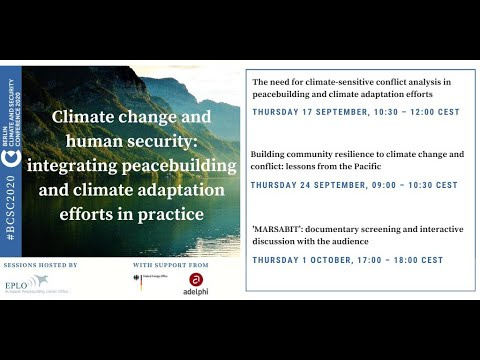
01 October 2020 - MARSABIT: Documentary Screening & Interactive Discussion
Climate action is best achieved through multilateral efforts involving an array of actors and stakeholders. The news coming out of climate talks can also be as wide and varied. To keep you posted on the latest happenings surrounding COP25 we'd like to share with you 10 of our favourite Twitter accounts.
If the United Nations is to effectively deal with climate-related security risks, it needs expert support from every region. That’s where the Climate Security Expert Network comes in.
Until recently, impressive economic growth, stable leadership and its attractiveness as a foreign investment hub put Ethiopia in a positive spotlight. However, the country still ranks low in human development and is highly dependent on rainfed agriculture, making it particularly vulnerable to climate change impacts. Combined with existing tensions and inequalities, climate vulnerability can exacerbate security risks. To mitigate these linkages, Ethiopia’s leadership should support implementation of conflict-sensitive climate change adaptation policies and include climate security in its conflict mitigation strategy.