

In 2020 the European Peacebuilding Liaison Office (EPLO), together with adelphi and the Climate Diplomacy initiative, with support from the German Federal Foreign Office, organised two series of online workshops. The series brought together civil society experts and policymakers to discuss challenges, lessons learned, best practices and recommendations relating to how to address the linkages between climate change, conflict and peace.
The discussions were focused in particular on how to integrate peacebuilding efforts and climate resilience programming, including through initiatives bringing communities together to address the effects of climate change and prevent conflict. A report presents the key points from the discussions in the eight workshops in the series, while a policy brief presents a summary of the key points and recommendations.
24 September 2020 - Community Resilience to Climate Change and Conflict: Lessons From the Pacific
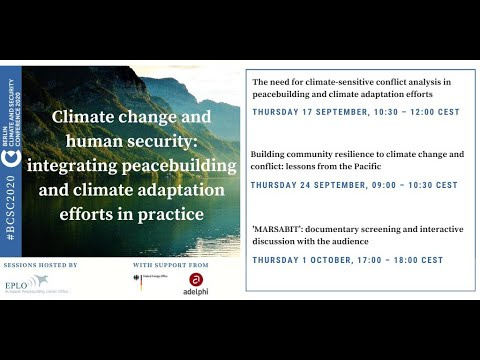
01 October 2020 - MARSABIT: Documentary Screening & Interactive Discussion
Governments must invest new effort and money to prevent climate change from driving new conflicts, according to a diplomatic statement drafted by the German foreign office.
A multi-sectoral and multilateral approach to South Asia's rivers could provide sustainable development, but it needs to include those already marginalised by a narrow development path.
Women are vital for effective climate policy making and implementation. In South Asia, more needs to be done on systematically integrating women into policy processes - as active stakeholders and not merely as victims of climate risks.
A new publication on SDGs and foreign policy, prepared by researchers at the German think tank adelphi, highlights a phenomenon I call this the ‘Great Splintering’ – the fracturing of political will for collective action on the global stage. This article outlines five steps we could take to revive multilateralism.