

In 2020 the European Peacebuilding Liaison Office (EPLO), together with adelphi and the Climate Diplomacy initiative, with support from the German Federal Foreign Office, organised two series of online workshops. The series brought together civil society experts and policymakers to discuss challenges, lessons learned, best practices and recommendations relating to how to address the linkages between climate change, conflict and peace.
The discussions were focused in particular on how to integrate peacebuilding efforts and climate resilience programming, including through initiatives bringing communities together to address the effects of climate change and prevent conflict. A report presents the key points from the discussions in the eight workshops in the series, while a policy brief presents a summary of the key points and recommendations.
24 September 2020 - Community Resilience to Climate Change and Conflict: Lessons From the Pacific
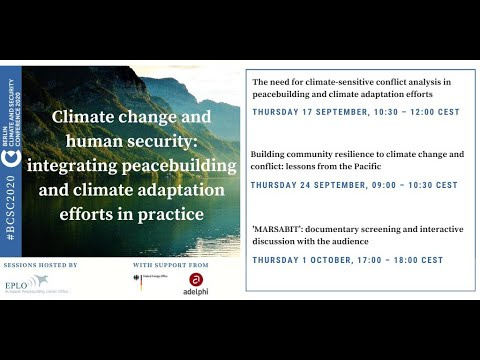
01 October 2020 - MARSABIT: Documentary Screening & Interactive Discussion
Satellite analysis shows ‘vanishing’ lake has grown since 1990s, but climate instability is driving communities into the arms of Boko Haram and Islamic State. Climate change is aggravating conflict around Lake Chad, but not in the way experts once thought, according to new research.
At a meeting of the Arctic Council, secretary of state Mike Pompeo refused to identify global warming as a threat, instead hailing an oil rush as sea ice melts. The US refused to join other Arctic countries in describing climate change as a key threat to the region, as a two-day meeting of foreign ministers drew to a close on Tuesday in Ravaniemi, Finland.
Around 1.6 billion people depend on forests for their livelihood, and about 2.6 billion people rely directly on agriculture. Deforestation, land degradation, and unsustainable management of ecosystems threaten those livelihoods and may contribute to resource-related conflicts and social unrest.
Right-wing populist parties are already part of the governments of seven EU member states and are expected to make up a quarter of MEPs after the European elections in May 2019. In this episode host Martin Wall talks to the authors of an explorative study on the the voices and the weight of right-wing populist parties in the formulation of European climate policy.