

In 2020 the European Peacebuilding Liaison Office (EPLO), together with adelphi and the Climate Diplomacy initiative, with support from the German Federal Foreign Office, organised two series of online workshops. The series brought together civil society experts and policymakers to discuss challenges, lessons learned, best practices and recommendations relating to how to address the linkages between climate change, conflict and peace.
The discussions were focused in particular on how to integrate peacebuilding efforts and climate resilience programming, including through initiatives bringing communities together to address the effects of climate change and prevent conflict. A report presents the key points from the discussions in the eight workshops in the series, while a policy brief presents a summary of the key points and recommendations.
24 September 2020 - Community Resilience to Climate Change and Conflict: Lessons From the Pacific
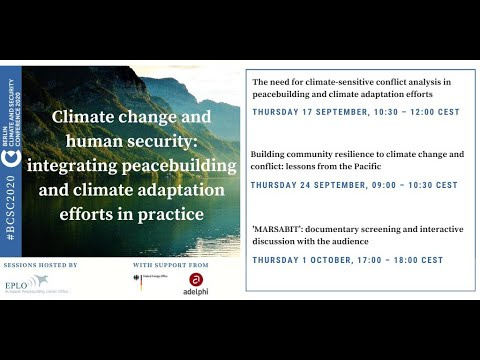
01 October 2020 - MARSABIT: Documentary Screening & Interactive Discussion
The European Commission, backed by 11 EU member states, refused to sign a declaration on “sustainable and smart gas infrastructure” tabled by the Romanian Presidency earlier this week because the text wasn’t ambitious enough on climate change, Euractiv has learned.
The Planetary Security Conference brings together experts, policy makers and politicians from around the world to discuss how best to tackle the security risks of climate change. The conference also reports on progress towards meeting the ambitions of The Hague Declaration which set out an action agenda for the community of practice on climate security. This year we spent some time interviewing some of the participants to get their insights into how climate change affects international and human security.
As the May 2019 EU elections loom and a new European Commission takes office, climate action can become a key driver of a reformed EU project for more solidarity, protection and innovation, writes Luca Bergamaschi, Senior Associate at E3G.
Resource consumption has grown exponentially over the past: between 1970 and 2010, the quantity of extracted materials has tripled. Not only the overall amount of resources extracted and consumed has risen rapidly, but also the diversity of resources has grown. While half a century ago, only a few materials such as wood, brick, iron, copper, and plastics were in high demand worldwide, today products are more complex and require a wide range of materials.