

In 2020 the European Peacebuilding Liaison Office (EPLO), together with adelphi and the Climate Diplomacy initiative, with support from the German Federal Foreign Office, organised two series of online workshops. The series brought together civil society experts and policymakers to discuss challenges, lessons learned, best practices and recommendations relating to how to address the linkages between climate change, conflict and peace.
The discussions were focused in particular on how to integrate peacebuilding efforts and climate resilience programming, including through initiatives bringing communities together to address the effects of climate change and prevent conflict. A report presents the key points from the discussions in the eight workshops in the series, while a policy brief presents a summary of the key points and recommendations.
24 September 2020 - Community Resilience to Climate Change and Conflict: Lessons From the Pacific
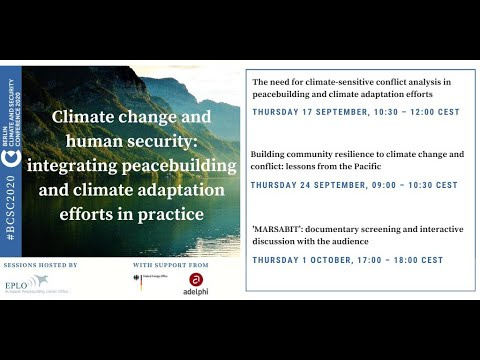
01 October 2020 - MARSABIT: Documentary Screening & Interactive Discussion
Limited access to energy is a significant barrier to development and holds back efforts to improve living conditions in developing and emerging economies. Around the world, 1.1 billion people still do not have access to electricity, and 2.8 billion still rely on animal and crop waste, wood, charcoal and other solid fuels to cook their food and heat their homes.
As the earth’s climate warms, people face mounting threats from rising seas, and more intense and frequent storms, heatwaves, fires, and droughts. When these events hit, people want to understand whether they are connected to climate change. Linking climate change with heatwaves, storms and other events can help us prepare for a changing world, argues Peter Stott.
A recent report by the UNEP focuses on addressing trade in wildlife and forest products across the three sectors of crime prevention and criminal justice, trade regulation and natural resource management. It finds that there is less focus on the legislative means for preventing offenses related to trade in wildlife and forest products and more attention on the means for detecting and punishing such offenses.
“I want you to panic”. This was the message that 16 year-old climate activist Greta Thunberg gave to the World Economic Forum in Davos on 25 January, and in it she struck right to the intergenerational justice issue at the heart of the sustainability project.