

In 2020 the European Peacebuilding Liaison Office (EPLO), together with adelphi and the Climate Diplomacy initiative, with support from the German Federal Foreign Office, organised two series of online workshops. The series brought together civil society experts and policymakers to discuss challenges, lessons learned, best practices and recommendations relating to how to address the linkages between climate change, conflict and peace.
The discussions were focused in particular on how to integrate peacebuilding efforts and climate resilience programming, including through initiatives bringing communities together to address the effects of climate change and prevent conflict. A report presents the key points from the discussions in the eight workshops in the series, while a policy brief presents a summary of the key points and recommendations.
24 September 2020 - Community Resilience to Climate Change and Conflict: Lessons From the Pacific
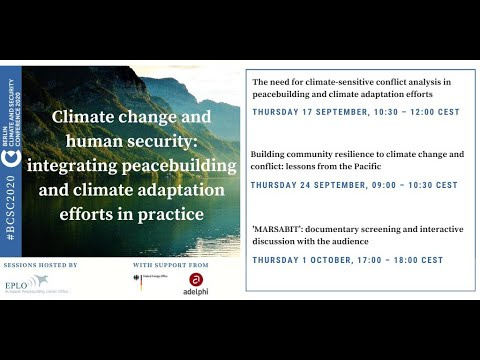
01 October 2020 - MARSABIT: Documentary Screening & Interactive Discussion
On 25 January 2019, the UN Security Council held an open debate to discuss the security implications of climate-related disaster events. The meeting, initiated by the Dominican Republic, underscored the global nature of climate-related disasters. Most speakers highlighted the need for better climate risk management as an important contribution to safeguarding international peace and security. The debate marks the beginning of a year in which climate security ranks high on the UN’s agenda.
Today, Friday 25th January 2019, the UN Security Council will hold an open debate addressing the impacts of climate-related disasters on international peace and security (at 4pm CET and 10am EST). President Danilo Medina of the Dominican Republic will chair the meeting, which will also include the participation of several member states at ministerial level.
The unabated growth of natural resource consumption raises risks that we will outstrip the capacities of ecosystems and governance institutions. At the same time, to achieve important global goals related to poverty alleviation, public health, equity and economic development such as those embodied in the United Nations Sustainable Development Goals (SDGs), we will simultaneously need more resources and better management of natural resources everywhere.
U.S. diplomats used to receive guidance about climate change and migration. The Government Accountability Office is recommending the State Department bring it back.