

In 2020 the European Peacebuilding Liaison Office (EPLO), together with adelphi and the Climate Diplomacy initiative, with support from the German Federal Foreign Office, organised two series of online workshops. The series brought together civil society experts and policymakers to discuss challenges, lessons learned, best practices and recommendations relating to how to address the linkages between climate change, conflict and peace.
The discussions were focused in particular on how to integrate peacebuilding efforts and climate resilience programming, including through initiatives bringing communities together to address the effects of climate change and prevent conflict. A report presents the key points from the discussions in the eight workshops in the series, while a policy brief presents a summary of the key points and recommendations.
24 September 2020 - Community Resilience to Climate Change and Conflict: Lessons From the Pacific
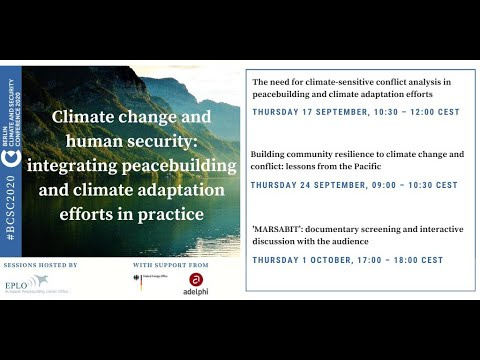
01 October 2020 - MARSABIT: Documentary Screening & Interactive Discussion
The report, requested by the US Congress in 2017, drew sharp criticism for being too thin on details and failing to show which bases are most at risk across the military.
The Katowice climate package brings minor progress, but COP 24 failed to deliver on the most fundamental issues such as raising ambition of national contributions, implementing human rights, and ensuring support for developing countries.
Brazil has demoted climate diplomacy as part of a foreign ministry shake-up, in Jair Bolsonaro’s first two weeks as president.
In some areas of the world, including Central America, rising sea levels and declining agricultural productivity due to climate change are expected to trigger major migratory flows, especially within countries. The role of policy-makers is it to promote local solutions while engaging in regional cooperation for a preventative approach.