

In 2020 the European Peacebuilding Liaison Office (EPLO), together with adelphi and the Climate Diplomacy initiative, with support from the German Federal Foreign Office, organised two series of online workshops. The series brought together civil society experts and policymakers to discuss challenges, lessons learned, best practices and recommendations relating to how to address the linkages between climate change, conflict and peace.
The discussions were focused in particular on how to integrate peacebuilding efforts and climate resilience programming, including through initiatives bringing communities together to address the effects of climate change and prevent conflict. A report presents the key points from the discussions in the eight workshops in the series, while a policy brief presents a summary of the key points and recommendations.
24 September 2020 - Community Resilience to Climate Change and Conflict: Lessons From the Pacific
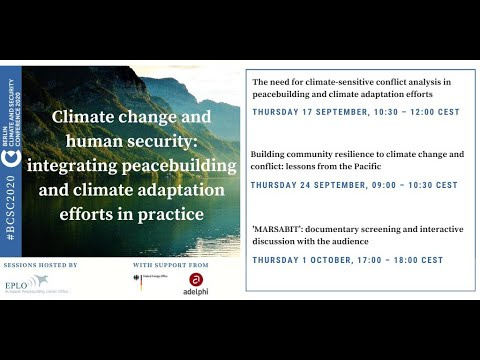
01 October 2020 - MARSABIT: Documentary Screening & Interactive Discussion
What outcomes do the agreements achieved at COP24 hold for cities and regions? Despite the decisive part the so-called non-state actors play in achieving the international climate goals, their role hasn't been formally recognized by the UNFCCC.
The Kigali Amendment to the Montreal Protocol, concluded in October 2016, has entered into force on January 1st, 2019. Its 65 signatories are now on the fast track to significantly reducing the use of harmful greenhouse gases in the production of cooling devices, representing a major step towards achieving the goals of the Paris Agreement. After a season of unsatisfying climate negotiations, the amendment's implementation marks a time of action and reminds the international community why climate diplomacy ultimately pays off.
In many ongoing armed conflicts, water has been used as a weapon of war, but it can also be a strong instrument of peace.
Climate adaptation has been praised for its potential for contributing to peace. It is highlighted for the potential to remake systems and equip the world to better cope with the impacts of climate change. However, these remain hopeful claims until rigorous research is done on how this might take place and what type of peace we might expect to result from the implementation of climate adaptation.