

In 2020 the European Peacebuilding Liaison Office (EPLO), together with adelphi and the Climate Diplomacy initiative, with support from the German Federal Foreign Office, organised two series of online workshops. The series brought together civil society experts and policymakers to discuss challenges, lessons learned, best practices and recommendations relating to how to address the linkages between climate change, conflict and peace.
The discussions were focused in particular on how to integrate peacebuilding efforts and climate resilience programming, including through initiatives bringing communities together to address the effects of climate change and prevent conflict. A report presents the key points from the discussions in the eight workshops in the series, while a policy brief presents a summary of the key points and recommendations.
24 September 2020 - Community Resilience to Climate Change and Conflict: Lessons From the Pacific
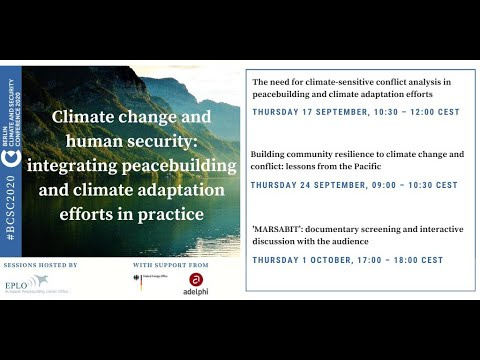
01 October 2020 - MARSABIT: Documentary Screening & Interactive Discussion
In a move that underscored Donald Trump’s isolation on trade and climate change, the two major economies inserted a reference to the Paris Agreement into Ceta.
Fourteen Latin American and Caribbean countries made history at the UN General Assembly on September 27 by signing the Escazú Agreement, a regional accord on public participation and access to information and justice in environmental affairs. It is the first region-wide agreement of its kind and has been touted a big step forward in recognising the rights of environmental defenders. Signatories now need to ratify the Agreement internally before it can enter into force.
Though India is now pushing for BIMSTEC, geography dictates that it cannot ignore SAARC. South Asia is extremely vulnerable to a range of climate impacts, ranging from shrinking glaciers and water scarcity to floods and rising sea levels. Responding to these risks is a complex task, also because often impacts affect more than one country and their severity exceeds the capacity of national governments. Climate change creates new challenges for regional organisations, and simultaneously increases their relevance.
US leadership on climate action: what a nice surprise! However, Germany needs to quickly step up efforts – or stand to lose its reputation in climate mitigation and energy transition.