

In 2020 the European Peacebuilding Liaison Office (EPLO), together with adelphi and the Climate Diplomacy initiative, with support from the German Federal Foreign Office, organised two series of online workshops. The series brought together civil society experts and policymakers to discuss challenges, lessons learned, best practices and recommendations relating to how to address the linkages between climate change, conflict and peace.
The discussions were focused in particular on how to integrate peacebuilding efforts and climate resilience programming, including through initiatives bringing communities together to address the effects of climate change and prevent conflict. A report presents the key points from the discussions in the eight workshops in the series, while a policy brief presents a summary of the key points and recommendations.
24 September 2020 - Community Resilience to Climate Change and Conflict: Lessons From the Pacific
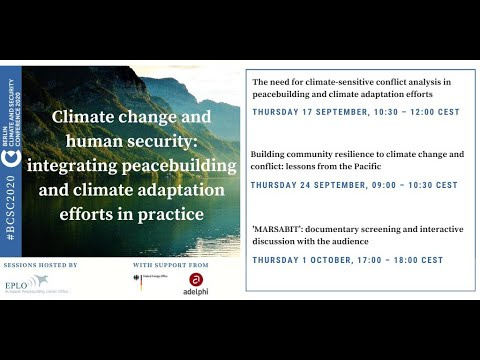
01 October 2020 - MARSABIT: Documentary Screening & Interactive Discussion
Liberia’s largest palm oil producer, Golden Veroleum Liberia (GVL) pulls out of the Roundtable on Sustainable Palm Oil (RSPO) – how can rural communities cope with the impacts? The forests near GVL’s Liberian plantations are not only sacred sites of the region's people but also heavily populated with chimpanzees, leopards, pygmy hippopotamus and forest elephants which are significant not only to the local ecosystem but globally.
Mine closures have caused social and political turmoil in many regions, for example in South Africa. But there are ways of planning and managing the phase-out so that when the inevitable happens, people are better prepared. A new study looks at opportunities beyond mining and finds that infrastructure that supports mining can also be put to new use.
Population pressure, a lack of economic opportunities, environmental degradation, and new forms of travel are contributing to human displacement and unsafe migration on an unprecedented scale. And as millions more people see climate change erode their livelihoods, the problem will get worse in the absence of visionary global leadership.
Scientists across the globe are developing live dashboards to study the natural world in unprecedented detail - ushering in a new age of opportunities and ethical dilemmas.