

In 2020 the European Peacebuilding Liaison Office (EPLO), together with adelphi and the Climate Diplomacy initiative, with support from the German Federal Foreign Office, organised two series of online workshops. The series brought together civil society experts and policymakers to discuss challenges, lessons learned, best practices and recommendations relating to how to address the linkages between climate change, conflict and peace.
The discussions were focused in particular on how to integrate peacebuilding efforts and climate resilience programming, including through initiatives bringing communities together to address the effects of climate change and prevent conflict. A report presents the key points from the discussions in the eight workshops in the series, while a policy brief presents a summary of the key points and recommendations.
24 September 2020 - Community Resilience to Climate Change and Conflict: Lessons From the Pacific
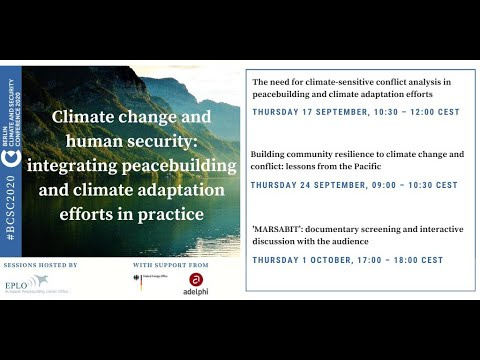
01 October 2020 - MARSABIT: Documentary Screening & Interactive Discussion
After an 18-month stretch without a White House science adviser – the longest any modern president has gone without a science adviser – Trump appoints extreme weather expert Kelvin Droegemeier to the post. Kelvin Droegemeier is vice president for research at the University of Oklahoma and a climate change scientist. His selection was widely welcomed.
Climate change threatens conflict and poverty in the Arab region, according to the UN Development Programme (UNDP). In a report published last week, the agency suggested climate risks could derail development gains, such as the decrease in infant mortality and the achievement of near universal primary education.
The links between climate change and security have started entering regional resolutions through the UN Security Council. Germany, elected for a seat on the Council in 2019-20, will again prioritize climate-related security risks as one of its main agendas. What prospects does a renewed engagement on climate security risks offer and is there scope for preventive participation?
As the world's biggest polluter, what China decides to do with its energy policy matters to the whole planet. And while progress on the domestic front has rightly won Beijing praise from climate scientists, China is the world's largest funder of coal plants overseas. Is the country employing double standards?