

In 2020 the European Peacebuilding Liaison Office (EPLO), together with adelphi and the Climate Diplomacy initiative, with support from the German Federal Foreign Office, organised two series of online workshops. The series brought together civil society experts and policymakers to discuss challenges, lessons learned, best practices and recommendations relating to how to address the linkages between climate change, conflict and peace.
The discussions were focused in particular on how to integrate peacebuilding efforts and climate resilience programming, including through initiatives bringing communities together to address the effects of climate change and prevent conflict. A report presents the key points from the discussions in the eight workshops in the series, while a policy brief presents a summary of the key points and recommendations.
24 September 2020 - Community Resilience to Climate Change and Conflict: Lessons From the Pacific
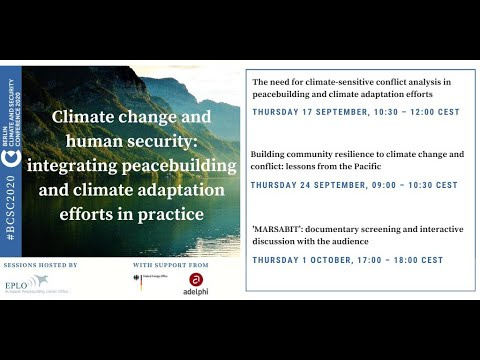
01 October 2020 - MARSABIT: Documentary Screening & Interactive Discussion
The longstanding dispute over water rights among Egypt, Sudan and Ethiopia escalated in 2011 when Ethiopia began construction of the Grand Ethiopian Renaissance Dam (GERD), in the absence of any agreement with downstream Egypt. The GERD dispute offers an alarming insight into just how dangerous future transboundary water disputes may become, particularly in the context of a changing climate.
Though focused on climate change, National Adaptation Plans offer important assessments of the risks a country faces and can be valuable in devising comprehensive pandemic response strategies.
Women in the region suffer disproportionately from climate impacts, but they also play an essential role in addressing climate change. With the right policy responses, it is possible to reduce security risks and empower women to better address the challenges they face.
As part of this year’s online World Water Week at Home, adelphi and IHE Delft convened the workshop "Water diplomacy: a tool for climate action?". The workshop reflected on the role that foreign policy can play in mitigating, solving and potentially preventing conflicts over the management of transboundary water resources, especially in a changing climate.