

EVENT SUMMARY: "Climate, Fragility and the SDGs: Lessons from Lake Chad"

Stressing the importance of building responses towards the security impacts of climate change based on science, multilateralism and lessons learnt, e.g. from Lake Chad, Ambassador Vale de Almeida highlighted that the UN system needs to play a more prominent role in assessing and addressing climate and environment related security risks. He welcomed the Secretary-General’s commitment to call for more ambitious climate action through the Climate Action Summit in September. In order to tackle climate-security issues “we must connect security, environmental and development policies better,” he concluded.
“If we don’t include climate into our context analysis to programme for peace and sustainable development, we risk getting the context very, very wrong,” Janani Vivekananda, Senior Advisor at adelphi, pointed out. Plans for sustainable development need to include climate risks, so that they can be sustained in the face of a changing climate. Ms. Vivekananda, who led a recently published climate-fragility assessment of the Lake Chad region, explained: “Lake Chad gave us a strong example of how we could get things very wrong”. While it is widely assumed that Lake Chad is shrinking, the climate-fragility assessment shows that the lake is currently not shrinking but has increased since the 1990s. This does not mean that climate change is not affecting the Lake Chad region, but “without this assessment, we, like many others would have continued perpetuating the assumption that the solutions to the region’s problems are linked to water scarcity. But our study found that the risk isn’t scarcity but unpredictability of rainfall,” Ms. Vivekananda said.
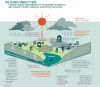
What do these findings mean for programming? The Lake Chad climate-fragility assessment shows that many programmes, military responses and stabilisation initiatives in the region have not taken sufficient account of climate risks. But some military responses have even undermined the ability of people to cope with climate shocks. “We need to make sure that all the efforts on stabilisation and humanitarian aid are climate-sensitive and that our efforts on climate adaptation consider conflict dynamics. This is not only true for Lake Chad but for a lot of settings,” the study’s authors recommend.
Concluding, Ms. Vivekananda referred to the Berlin Call for Action and how the Lake Chad Risk Assessment vindicated this call, and showed that three things are required:
- more and better risks assessments which integrate climate change into the risk landscape
- to strengthen capacity at the UN on the climate-security nexus, both at headquarters and in the field
- to ensure political coherence in terms of streamlining climate, sustainable development, security and peacebuilding across projects and programmes.
The findings of the Lake Chad Risk Assessment resonated very much with Mahamat Adamou, the President’s Advisor on Environmental Issues in Chad, and his experiences on the ground. Mr. Adamou urged countries to “build bridges instead of walls” and underlined that “climate change has a tough impact. It reduced the arable land, species have disappeared, and the youth have left in search for livelihood opportunities”. He said that for a young person in a rural context, opportunities are literally drying out. The choices a young person has are not attractive to them. Uncertainty is driving the young population into armed groups who offer them some security. Mr. Adamou illustrated the link between natural resources and migration and possible solutions to address this link: “African countries demonstrate that degradation of natural resources is a serious cause of forced migration. The 3S initiative creates green employment opportunities for youth and addresses the driving factors behind migration". The initiative’s approach is to “build sustainable value chains, which offer new opportunities for communities suffering from challenges such as poverty, depleting resources and land degradation. It fosters resilient agriculture."
Matti Lehtonen, Senior Advisor with UN Environment, highlighted three things which need to be addressed in order to tackle climate security risks:
- Individual livelihood approaches that are linked to economic needs
- Adaptation, which needs to be planned in tangible ways, and
- Governance, which is crucial for building trust in institutions as well as for longer term planning
He also pointed out the importance of including women into the management of ecosystem services, as in pastoralist contexts, the women are often confronted with the impacts of climate change, while the men are away on transhumance. Within the UN system, the Climate Security Mechanism was set up to enhance the UN’s capacity on climate security risk. The mechanism is facing the question of how to connect expertise, and also how to connect this within the UN system, Mr. Lehtonen said. He does not think of the mechanism as a new additional layer, but rather it should be added to existing analysis and expertise available. “This analysis must be improved, for example, by putting together quantitative information with context-specific qualitative information,” he said. The Climate Security Mechanism is working with field analysts on how to apply climate fragility risk assessments on the ground, and how to translate the knowledge and findings into action.
The discussion centred around the need to have more climate security assessments and how to translate findings into action on the ground as well as in the UN Security Council. Mr. Adamou emphasised that climate security risks are real and that “it is not only our country’s problem, but also a global problem” which needs to be urgently integrated into all sustainable development action.
The side event was co-organised by the European Union Delegation to the United Nations in New York and adelphi. For more information about the study, visit https://shoring-up-stability.org/.



