

Capacity Building
Climate Change
Climate Diplomacy
Early Warning & Risk Analysis
Security
Global Issues
Daria Ivleva, adelphi

Acknowledging that climate change is a global threat to security in the 21st century, the Dutch government has convened an international conference on Planetary Security on 2-3 November 2015 in The Hague. The aim of the conference was to facilitate strategic exchange on existing foreign policy and security architecture. During the conference, experts and policy-makers presented their perspectives on the risks of climate change and actions needed.

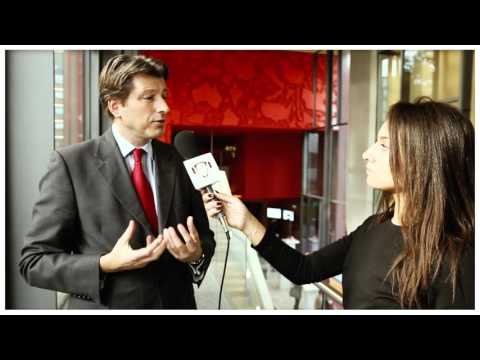
We have interviewed several experts for the ECC Video Platform. There was broad consensus that the compound climate-fragility risks require integrated solutions. Alexander Verbeek, organiser of the conference, underlines that the participants from the climate and security community appreciated the opportunity for continuous knowledge building and for joint planning, as the conference is meant to take place annually. Dan Smith, Director of SIPRI and co-author of "A New Climate for Peace", highlights the importance of cooperation and broad dialogue to build an integrated resilience agenda.

The conference, therefore, both helped reiterate the value of integrated action across sectors and disciplines and contributed to building the necessary networks. Part of the solution to climate-related security challenges will be to craft a positive narrative on climate action. Ensuing discussions and activities will require all pieces of the jigsaw puzzle to come together. The defence, aid and foreign policy communities need to cooperate closely and create an integrated, action-oriented agenda.

To watch the video interviews with Major General Muniruzzaman (Retd) and Roger-Mark De Souza, please visit the ECC Video Platform.


At a briefing ahead of the COP25, foreign minister Heiko Maas called for higher ambition for the European Union, which should act as a role-model to encourage other states to boost their commitments to climate action. He further reiterated the importance of supporting multilateralism and an international climate regime that is able to withstand setbacks, such as the US withdrawal of the Paris Agreement.

Climate Change
Early Warning & Risk Analysis
Global Issues
adelphi

Climate change is increasingly challenging global security and undermining peacebuilding efforts. UN Environment and the European Union have joined forces to address these challenges. With the support of adelphi, they have developed a toolkit on ‘Addressing climate-fragility risks’. This toolkit facilitates the development and implementation of strategies, policies, and projects that seek to build resilience by linking climate change adaptation, peacebuilding, and sustainable livelihoods, focusing on the pilot countries Sudan and Nepal.

Climate Change
Security
Global Issues
European Security and Defence College (ESDC)

Nobody needs to be convinced that climate change affects our very existence and security. However, experts are interested to know how climate change affects security at a global level and what the EU can do in that regard. This was the main aim of the European Security and Defence College (ESDC) Climate Change and Security Course co-organised by the French Institute for Higher National Defence Studies (IHEDN) and adelphi, as part of the Climate Diplomacy initiative supported by the German Federal Foreign Office, which took place in Brussels from 21 to 23 October 2019.

Climate Change
Security
Sub-Saharan Africa
11 November, 2019

Shoring up Stability in Niger

Stella Schaller, Janani Vivekananda (adelphi) and Oli Brown (Chatham House)

The new study Shoring up Stability demonstrates, for the first time, how climate change interacts with conflict and exacerbates the humanitarian crisis in the Lake Chad region. To launch the report and discuss its findings with local policy-makers, experts and practitioners, the German Embassy in Niger, adelphi and CNESS co-organised a launch event on 24 October in Niamey. Insights from Niger point to the importance of investing in governance rather than technical fixes.