

Acknowledging that climate change is a global threat to security in the 21st century, the Dutch government has convened an international conference on Planetary Security on 2-3 November 2015 in The Hague. The aim of the conference was to facilitate strategic exchange on existing foreign policy and security architecture. During the conference, experts and policy-makers presented their perspectives on the risks of climate change and actions needed.
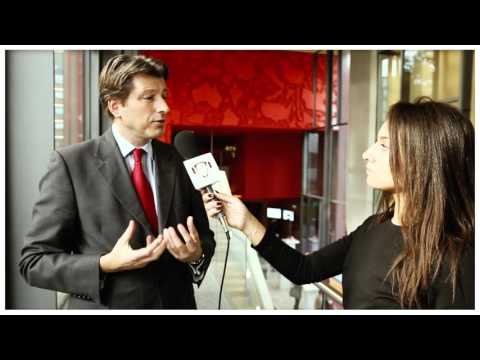
We have interviewed several experts for the ECC Video Platform. There was broad consensus that the compound climate-fragility risks require integrated solutions. Alexander Verbeek, organiser of the conference, underlines that the participants from the climate and security community appreciated the opportunity for continuous knowledge building and for joint planning, as the conference is meant to take place annually. Dan Smith, Director of SIPRI and co-author of "A New Climate for Peace", highlights the importance of cooperation and broad dialogue to build an integrated resilience agenda.
The conference, therefore, both helped reiterate the value of integrated action across sectors and disciplines and contributed to building the necessary networks. Part of the solution to climate-related security challenges will be to craft a positive narrative on climate action. Ensuing discussions and activities will require all pieces of the jigsaw puzzle to come together. The defence, aid and foreign policy communities need to cooperate closely and create an integrated, action-oriented agenda.
To watch the video interviews with Major General Muniruzzaman (Retd) and Roger-Mark De Souza, please visit the ECC Video Platform.
In this interview, EcoPeace Directors Nada Majdalani (Palestine), Yana Abu-Taleb (Jordan) and Gidon Bromberg (Israel) explain why disengaging from a shared environment can aggravate the region’s security challenges.
At the conclusion of the 50th Pacific Islands Forum, Pacific leaders issued a Forum Communiqué and the ‘Kainaki II Declaration for Urgent Climate Change Action Now’ – the strongest collective statement the Forum has issued on climate change. Pacific leaders highlight the UN Secretary-General’s Climate Action Summit, the SAMOA Pathway Review, and 25th session of the Conference of the Parties (COP 25) to the UNFCCC as “global turning points to ensure meaningful, measurable and effective climate change action”.
If ratified, the Mercosur-EU trade deal may reinforce the parties’ commitment to climate action. Yet, its potential relevance is weakened by a language that often stops short of concrete commitments, as well as political resistance.
Iraq is on the verge of an environmental breakdown, and climate change is not helping. The country's fragile environment and the increasing scarcity of natural resources — particularly water — are a result of poor environmental management, as well as several political and historical factors. However, as climate change impacts add to the existing pressures, the environmental collapse turns into a security issue.