

Capacity Building
Climate Change
Climate Diplomacy
Early Warning & Risk Analysis
Security
Global Issues
Daria Ivleva, adelphi

Acknowledging that climate change is a global threat to security in the 21st century, the Dutch government has convened an international conference on Planetary Security on 2-3 November 2015 in The Hague. The aim of the conference was to facilitate strategic exchange on existing foreign policy and security architecture. During the conference, experts and policy-makers presented their perspectives on the risks of climate change and actions needed.

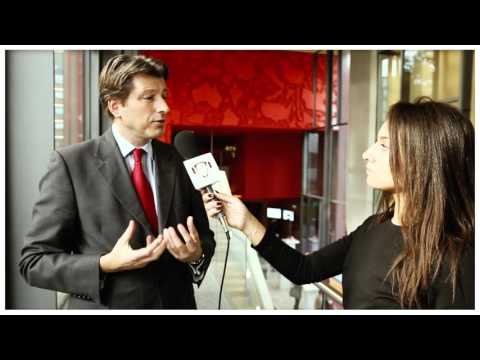
We have interviewed several experts for the ECC Video Platform. There was broad consensus that the compound climate-fragility risks require integrated solutions. Alexander Verbeek, organiser of the conference, underlines that the participants from the climate and security community appreciated the opportunity for continuous knowledge building and for joint planning, as the conference is meant to take place annually. Dan Smith, Director of SIPRI and co-author of "A New Climate for Peace", highlights the importance of cooperation and broad dialogue to build an integrated resilience agenda.

The conference, therefore, both helped reiterate the value of integrated action across sectors and disciplines and contributed to building the necessary networks. Part of the solution to climate-related security challenges will be to craft a positive narrative on climate action. Ensuing discussions and activities will require all pieces of the jigsaw puzzle to come together. The defence, aid and foreign policy communities need to cooperate closely and create an integrated, action-oriented agenda.

To watch the video interviews with Major General Muniruzzaman (Retd) and Roger-Mark De Souza, please visit the ECC Video Platform.


Civil Society
Climate Change
Energy
Europe
Chloé Farand (DeSmogUK), Climate Home News

French environment minister Nicolas Hulot has resigned live on national radio in a surprise move that will come as a blow to president Emmanuel Macron’s green credentials. Nicolas Hulot had not made the French president aware of his decision to quit, he told radio presenters, adding his time in office had been an ‘accumulation of disappointments’. 

Biodiversity & Livelihoods
Forests
Land & Food
Private Sector
Sub-Saharan Africa
Fidel C T Budy, The Conversation

Liberia’s largest palm oil producer, Golden Veroleum Liberia (GVL) pulls out of the Roundtable on Sustainable Palm Oil (RSPO) – how can rural communities cope with the impacts? The forests near GVL’s Liberian plantations are not only sacred sites of the region's people but also heavily populated with chimpanzees, leopards, pygmy hippopotamus and forest elephants which are significant not only to the local ecosystem but globally.

Civil Society
Minerals & Mining
Private Sector
Sustainable Transformation
Technology & Innovation
Bernelle Verster, Cheri-Leigh Young, Francois Steenkamp, Jennifer Lee Broadhurst and Sue Harrison (University of Cape Town)

Mine closures have caused social and political turmoil in many regions, for example in South Africa. But there are ways of planning and managing the phase-out so that when the inevitable happens, people are better prepared. A new study looks at opportunities beyond mining and finds that infrastructure that supports mining can also be put to new use.

Adaptation & Resilience
Biodiversity & Livelihoods
Cities
Climate Change
Climate Diplomacy
Environment & Migration
Land & Food
Water
Global Issues
Erik Solheim (former UNEP Executive Director) and William Lacy Swing (former IOM Director General)

Population pressure, a lack of economic opportunities, environmental degradation, and new forms of travel are contributing to human displacement and unsafe migration on an unprecedented scale. And as millions more people see climate change erode their livelihoods, the problem will get worse in the absence of visionary global leadership.